
AR Engineering

Uncategorized

images (1)

5 Signs Your Motor Manufacturing Line Needs an Automation Upgrade

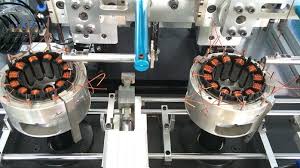
Introduction Running a motor manufacturing operation is demanding. Between managing production targets, controlling costs, and maintaining quality, it can be easy to overlook the warning signs that your production line is falling behind. But in today’s competitive market, an inefficient line does not just slow you down — it costs you customers. Here are five clear signs that it is time to invest in automation. Sign 1: Your Rejection Rate Is Too High If a significant portion of your finished motors are failing quality checks — due to incorrect turn counts, poor insulation, or inconsistent winding — manual processes are almost certainly the cause. Automatic winding and paper inserting machines eliminate the human variables that lead to rejections, bringing defect rates down to near zero. Sign 2: Production Output Has Plateaued Have you hit a ceiling on how many units your line can produce per day? Manual winding is inherently limited by operator speed and stamina. Automatic machines operate consistently at high speed — day after day, shift after shift — without fatigue. If you need to scale output, automation is the only sustainable path. Sign 3: You Are Losing Orders to Faster Competitors Lead time matters. If competitors are delivering orders faster than you, they likely have more automated production lines. Customers today expect quick turnaround without compromising on quality. An automated winding line can dramatically reduce your production cycle time and help you win — and keep — more business. Sign 4: Labor Costs Are Eating Into Your Margins Skilled winding operators are expensive to hire, train, and retain. As labor costs rise and skilled workers become harder to find, manufacturers who depend heavily on manual winding face shrinking margins. Automation reduces your dependency on skilled labor for repetitive tasks, freeing your team to focus on higher-value work. Sign 5: You Cannot Consistently Replicate Quality Across Shifts Quality should not depend on which operator is on shift. If your morning shift produces better motors than your night shift, your process has a consistency problem. Automatic winding machines store and execute the exact same parameters every time — regardless of the operator, the shift, or the day. The Solution: AR Engineering’s Automation Machinery AR Engineering offers a complete range of automatic winding and paper inserting machines designed specifically for motor manufacturers facing exactly these challenges. From CNC ceiling fan winding machines to automatic BLDC stator winders, our solutions are built to boost your output, improve your quality, and protect your margins. Conclusion If any of these five signs sound familiar, your manufacturing line is ready for an automation upgrade. The good news is — the investment pays for itself faster than most manufacturers expect. Contact AR Engineering today and let our team help you build a smarter, faster, more competitive production line.

5 Signs Your Motor Manufacturing Line Needs an Automation Upgrade Read More »
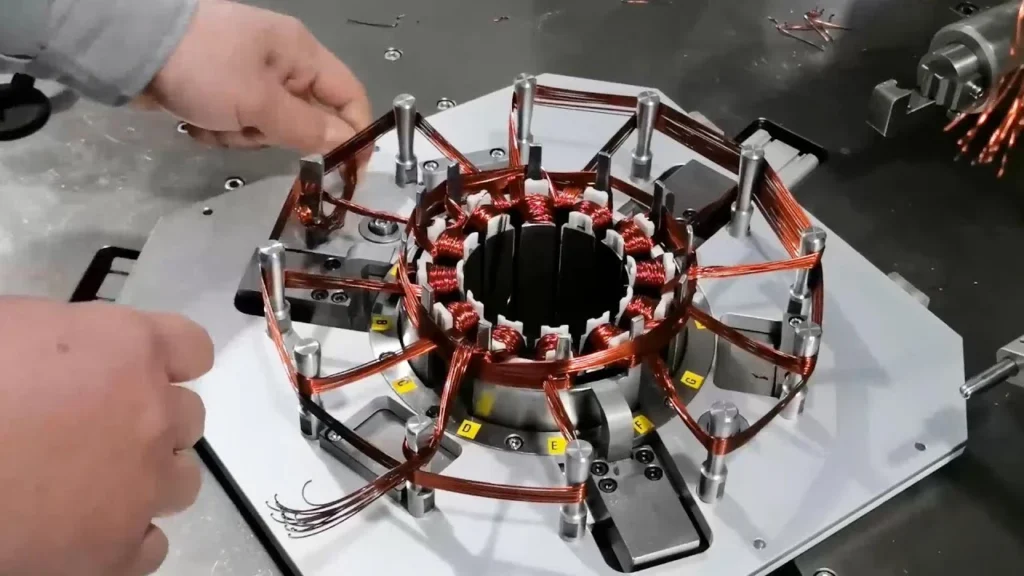
challenges in bldc motor winding process shown highlighting intricate coil placements

BLDC Motors Are the Future — Here’s Why Your Winding Process Needs to Keep Up

Introduction Brushless DC motors — commonly known as BLDC motors — are rapidly becoming the preferred choice across a wide range of industries. From energy-efficient ceiling fans and home appliances to electric vehicles and industrial drives, BLDC motors offer a compelling combination of high efficiency, long lifespan, and low maintenance. But as demand for BLDC motors surges, manufacturers face a critical challenge: winding BLDC stators is significantly more complex than winding conventional motors. What Makes BLDC Stator Winding Different? Unlike traditional AC induction motors, BLDC stators require: Tight turn-count accuracy — even a single missed turn affects motor performance Precise wire tension control — inconsistent tension causes hotspots and early motor failure Multiple pole winding — BLDC stators often have 9, 12, or 18 slots requiring sequential, precise winding Compact coil placement — BLDC designs leave very little tolerance for winding errors Manual winding of BLDC stators is not just slow — it is practically impossible to scale without sacrificing quality. The Role of Automatic BLDC Winding Machines Automatic BLDC stator winding machines are specifically engineered to handle these demands. With programmable multi-pole winding sequences, digital tension control, and high-speed needle or flyer mechanisms, they deliver: Consistent turn counts across every pole and every unit Uniform wire tension throughout the winding process Faster cycle times — up to 3x faster than manual winding Seamless switching between different stator configurations The result is a BLDC stator that meets strict performance specifications — every time, at scale. Why This Matters for Your Business The BLDC motor market is growing rapidly. Manufacturers who can produce high-quality BLDC stators efficiently and cost-effectively will capture a significant share of this expanding market. Those who rely on outdated manual processes will struggle to compete on quality, speed, and price. Investing in automatic BLDC winding technology is not just an operational upgrade — it is a strategic business decision. AR Engineering’s BLDC Winding Solutions Our Automatic BLDC Stator Winding Machine and BLDC CW01 are designed from the ground up for the demands of modern BLDC motor production. With over 15 years of winding machine expertise, we understand the precision requirements of BLDC stators — and we build our machines to exceed them. Conclusion BLDC motors are not a trend — they are the future of efficient, sustainable motor technology. Your winding process needs to be ready for that future today. Get in touch with AR Engineering to learn how our BLDC winding machines can transform your production capabilities.

BLDC Motors Are the Future — Here’s Why Your Winding Process Needs to Keep Up Read More »

images

How Automatic Coil Winding Machines Are Transforming Modern Motor Manufacturing

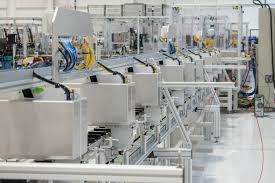
Introduction The motor manufacturing industry is undergoing a profound transformation. As global demand for electric motors continues to rise — driven by the rapid growth of electric vehicles, home appliances, and industrial automation — manufacturers are under increasing pressure to produce more, faster, and with greater precision than ever before. At the heart of this transformation is one critical technology: automatic coil winding machines. The Problem With Manual Winding For decades, coil winding was a labor-intensive, highly skilled process. Operators manually wound copper wire around stator or armature cores — a task that required patience, precision, and years of experience. The results, while often acceptable, were inconsistent. Turn counts varied. Wire tension fluctuated. Insulation placement was imperfect. The consequences? Higher rejection rates, increased material wastage, longer production cycles, and ultimately — motors that underperformed or failed prematurely in the field. Enter Automatic Winding Machines Automatic coil winding machines eliminate these variables entirely. By programming winding parameters — including turn count, wire tension, coil pitch, and insertion speed — manufacturers can achieve perfect, repeatable results across every single unit produced. The benefits are immediate and measurable: Productivity increases of 40–60% compared to manual winding Near-zero rejection rates due to consistent winding accuracy Reduced material wastage through precise wire tension control Lower labor dependency and training costs Faster production cycles to meet growing order volumes CNC Technology: The Game Changer Modern automatic winding machines are CNC-driven, meaning every parameter is digitally controlled and stored. Switching between different stator or coil specifications is as simple as loading a saved program — no mechanical adjustments, no downtime, no errors. For ceiling fan manufacturers, BLDC motor producers, and armature winding operations, this level of flexibility is invaluable. One machine can handle multiple product variants with the push of a button. The AR Engineering Advantage At AR Engineering, we have spent over 15 years refining our automatic winding machines to meet the real-world demands of motor manufacturers. Our machines are not just precise — they are built to last, easy to operate, and backed by a dedicated technical support team. Whether you are scaling up an existing line or setting up a new manufacturing facility, our winding solutions are designed to grow with your business. Conclusion The future of motor manufacturing is automated, precise, and data-driven. Manufacturers who invest in automatic coil winding technology today will be the ones who lead their markets tomorrow. Ready to upgrade your production line? Contact AR Engineering today for a free consultation.

How Automatic Coil Winding Machines Are Transforming Modern Motor Manufacturing Read More »

Shopping Cart